
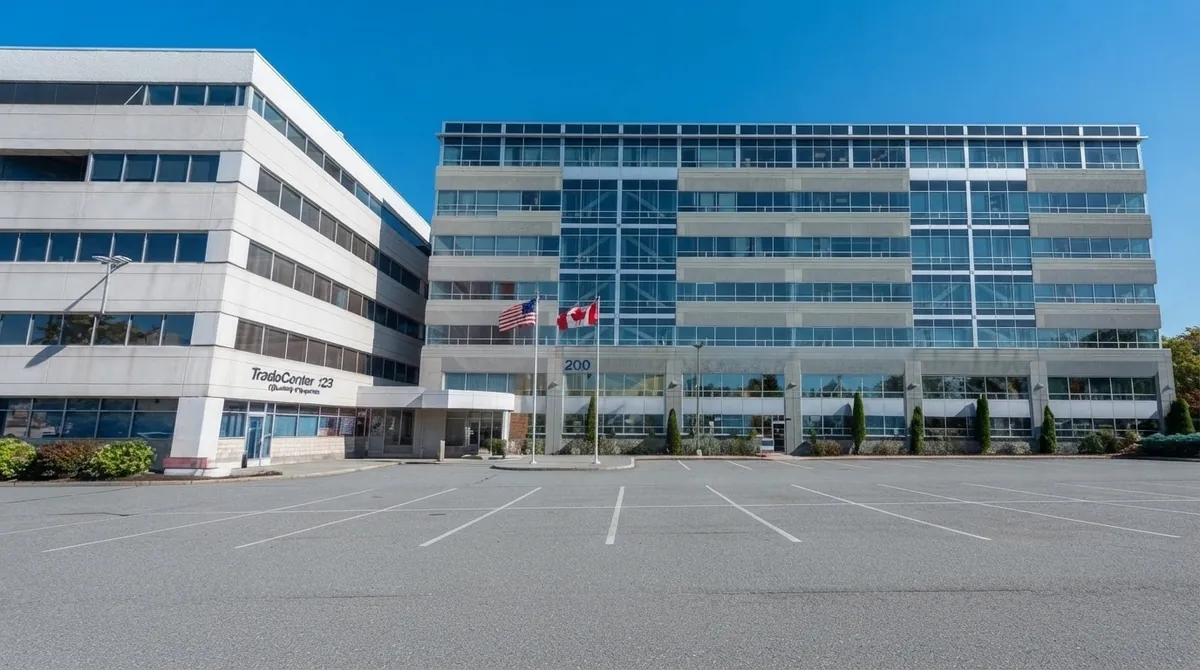
The Middlesex County court system in Massachusetts covers one of the most populous counties in New England. To find publicly accessible information about court records, start with MiddlesexMACourt.us — a resource that helps navigate the public court data of this county. Additionally, records can be obtained through the official portals of the Massachusetts state courts, directly at the court clerk's office, and through municipal government resources. Records are maintained by clerks of the respective court divisions, and most are available online or upon request.
Middlesex Court System Overview
Middlesex County is served by the Trial Court of the Commonwealth of Massachusetts. Unlike many other states, Massachusetts does not use a single "county court" for all cases — instead, the court system is divided into separate departments: District Court, Superior Court, Probate and Family Court, Housing Court, and Juvenile Court. Each has its own jurisdiction.
The Superior Court for Middlesex handles the most serious criminal and civil cases. The main courthouse is located in Woburn:
The second division of the Superior Court operates in Cambridge. The District Court is represented by several branches throughout the county — from Lowell to Framingham — each serving specific cities and towns.
Courts Serving Middlesex
Residents of the county are served by an extensive network of courts. Below are the main ones.
District Courts (selective)
Superior Court
Probate and Family Court
Juvenile Court
Federal Court
The county falls under the jurisdiction of the U.S. District Court for the District of Massachusetts with its main location in Boston:
Bankruptcy cases are handled by the U.S. Bankruptcy Court for the District of Massachusetts at the same address.
What Types of Cases Middlesex Courts Hear
The county courts cover virtually all categories of cases that a resident or business might encounter:
- Criminal cases: felonies, misdemeanors, minor offenses
- Civil lawsuits: from small claims to complex commercial disputes
- Family law: divorce, custody, alimony, paternity
- Probate and estate matters: wills, guardianship, conservatorship, trusts
- Juvenile cases: juvenile offenses, child protection, adoption
- Traffic violations and DUI
- Housing disputes (Housing Court)
The specific court depends on the type and seriousness of the case — this is explained in more detail below.
District Court Cases in Middlesex
District Courts in Massachusetts are the courts of first instance for most criminal and civil cases. They handle misdemeanors, minor offenses, preliminary hearings in felony cases, and civil claims up to $50,000. Traffic violations also start here.
The Superior Court takes on felonies after a grand jury indictment and civil cases where the amount exceeds the jurisdiction of the District Court or where a party demands a jury trial in a civil process. Cases are assigned to judges according to the internal rules of each division. The Presiding Justice of each District Court is responsible for administration.
Magistrate Court Cases in Middlesex
In Massachusetts, the role that magistrate courts play in other states is effectively carried out by the District Court and Clerk-Magistrates. The Clerk-Magistrate conducts preliminary hearings for certain criminal complaints — particularly those initiated by private individuals — and decides whether there is sufficient cause to issue a charging document.
Small claims are handled in the District Court for disputes up to $7,000. The procedure is simplified: formal rules of evidence are relaxed, and parties often represent themselves. Traffic violations and DUI claims also start at the District Court level, where the Clerk-Magistrate may conduct a preliminary hearing. If a case requires a full trial, it is transferred to a judge.
Family Law, Probate, and Juvenile Matters in Middlesex
Family Law
Divorce, custody, alimony, protective orders, and paternity establishment are all handled by the Middlesex Probate and Family Court in Woburn. As noted by the Lowell city page, divorce records are kept at the Probate Court, not in municipal archives.
Probate and Estate Matters
The same Probate and Family Court deals with wills, estate administration, guardianship of incapacitated adults, and conservatorship. Trust disputes also fall under its jurisdiction. Applications can be filed in person or through the eFile electronic filing system.
Juvenile Justice
The Juvenile Court in Cambridge handles juvenile offenses and child protection (Care and Protection) cases. Juvenile case records are confidential under Massachusetts law and not accessible to the general public.
How Cases Move Through the Middlesex Court System
The progression of a case depends on its type, but the general scheme is as follows:
- Initiation. A criminal case begins with a complaint or indictment; a civil case starts with the filing of a complaint; a family or probate case begins with a petition.
- Judge Assignment. The Clerk's Office assigns a case number and distributes it among judges according to the division's internal rules.
- Initial Hearing. In criminal cases, this is an arraignment — the defendant is informed of the charges and bail conditions are set. In civil cases, it is a scheduling conference.
- Pretrial Phase. Parties exchange evidence (discovery), file motions. In criminal cases, plea negotiations may occur.
- Trial. The case is resolved by verdict, jury decision, settlement, or default judgment.
- Post-Judgment. The convicted person is sentenced; parties may appeal to the Appeals Court. In civil cases, enforcement of the judgment occurs.
Court Administration, Local Rules, and Public Access in Middlesex
Each department of the Trial Court has its own Chief Justice, and administrative management is carried out by the Office of Court Management. At the local level, the Presiding Justice of each District Court and the Regional Administrative Justice for the Superior Court coordinate the work of judges and staff.
Local rules (Standing Orders) for each division are published on the Trial Court website. It is recommended to familiarize yourself with them before filing documents, as formatting and timing requirements may vary.
Public Access
According to the Public Records Law (M.G.L. c. 66, § 10), most court records are publicly accessible. Exceptions include:
- Juvenile cases — confidential
- Guardianship and child protection cases — usually closed
- Records sealed by court order
- Records of criminal cases that have been expunged
Hearings in most cases are open to the public. Some courts offer remote participation via Zoom — check with the specific court's clerk's office.
Court Records and Related Court Resources in Middlesex
Below are key resources for finding court records and related information.
- Online Case Search. The Massachusetts Trial Court Electronic Case Access portal allows searching for District Court and Superior Court cases by name or case number.
- Hearing Calendar. The schedule of sessions is available through the same portal or directly at the court clerk's office.
- Forms and Self-Help. The Trial Court forms page provides forms for various types of cases — from small claims to family law.
- Registry of Deeds. The Middlesex South Registry of Deeds in Cambridge (Register Maria C. Curtatone) maintains property records. Land records are also available through the Weston Assessor's Office.
- Public Records Request. Municipal clerks process requests for birth, marriage, and death certificates. For example, the Lowell public records page explains which documents the city holds and which are held by the court.
- Fee and Bill Payment. Cambridge residents can view and pay bills online, including fees for Vital Records.
- Sex Offender Registry. The Massachusetts Sex Offender Registry Board (SORB) maintains an online registry.
- Inmate Search. The Department of Correction offers a search tool for individuals serving sentences in state correctional facilities.
- Crime Statistics. Crime data is available through the FBI UCR portal and the Massachusetts State Police Crime Reporting Unit.
To start searching for county court records, use MiddlesexMACourt.us — it provides links to major public databases and explanations of access procedures.